
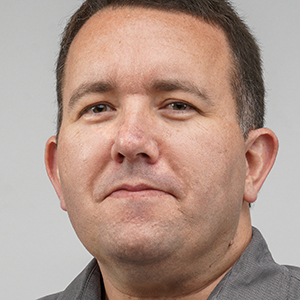
Ex-Polk deputy guilty in DUI crash that killed 2 on Courtney Campbell Causeway
One dark, early morning almost four years ago, the driver of a Nissan GTR sports car tore eastward along the Courtney Campbell Causeway at more than 100 mph. A dashcam recorded as the car zipped past palm trees and highway barriers alongside the waters of Old Tampa Bay. Two red taillights appeared in the distance. Less than 10 seconds later, the back of a gray Kia SUV filled the frame. A loud bang marked the moment that a rear-end collision sent the SUV tumbling and hurled two men to the pavement.On Wednesday, a Tampa jury decided that Joshua Kyle Roelofs was criminally responsible for the crash that killed Kris Koroly and Ricky Gongora.Roelofs, a onetime Polk County sheriff’s deputy who admitted to fleeing the country last year in an attempt to avoid prosecution, was convicted of DUI manslaughter, vehicular homicide and other charges stemming from the April 13, 2022, collision. His sentencing guidelines place him in the range of 32 years in prison. He could get up to life.Hillsborough Circuit Judge G. Gregory Green set sentencing for March 16.Roelofs, 36, bookended two days of testimony when he took the witness stand in his defense. He admitted that he’d had two vodka drinks hours before the crash while visiting two St. Petersburg bars with a friend. But he wasn’t buzzed, he said. He’d eaten a large meal the previous evening. He’d been up since 6 a.m. and felt tired as he began the long drive back to his Mulberry home.He was asked about the collision.“I basically woke up to...” his voice broke as he fought tears. He paused for several seconds. “To the impact,” he said.He thought the SUV had pulled out in front of him, he said. It hadn’t.“I think I jerked the wheel,” he said.A toxicologist with the Florida Department of Law Enforcement testified that a sample of Roelofs’ blood, drawn from his arm about five hours after the crash, registered an alcohol content of 0.069. Based on that result and information about the timing of his last drink, his blood alcohol content was estimated between 0.13 and 0.21 when the crash occurred. The limit at which state law presumes a person is too impaired to drive is 0.08.Jurors saw receipts from Park & Rec and Yard of Ale, the two St. Petersburg bars Roelofs had visited. They showed he’d paid for numerous drinks. Prosecutors asserted he’d drank at least five, including two double shots.The jury also saw video of the Nissan’s long drive. The footage began in downtown St. Petersburg and captured Roelofs and a passenger chatting and laughing as they cruised the darkened streets. The car weaved over white lane markers. A horn honked, and someone yelled and laughed as the car surged onto Interstate 275, its engine revving.At about 3:30 a.m., the camera showed Roelofs’ car rolling slowly through a mobile home park, where Roelofs dropped off his passenger. “Bro, you OK?” the other man asked.“Yeah,” Roelofs replied. “You sure?” the man asked again.In the video, Roelofs said he was all right, adding that he planned to drive with windows down and take back roads as he made his way home.He crashed less than 10 minutes later.Assistant State Attorney Kelsey Day argued that his words in the video showed Roelofs knew he was in no condition to drive.“His plan is to take the back streets,” Day told the jury. “That’s not the plan of a person who is simply tired. That’s the plan of a person who wants to evade law enforcement.”In closing arguments, Assistant Public Defender Nicole Engebretsen said Roelofs drove with the windows down to stay awake. She argued that he fell asleep behind the wheel because he’d been up all day.Koroly and Gongora were friends and co-workers at the Salt Cracker Fish Camp in Clearwater. They rode in the SUV’s back seat. In the front seats were William Camacho, the driver, and his girlfriend, Jessica Perez Ruiz.Testifying through a Spanish-language interpreter, Perez Ruiz remembered they were heading to a casino and had stopped at a bank to get money. She said she fell asleep.From there, she remembered being thrown to the ground. She found herself atop a roadway barrier. She remembered police cars and an ambulance and lying in pain as she counted to five. Her next memory was lying in the hospital, where she was treated for a broken leg and scratches and scrapes across her body. Medical staff would give her injections to stop blood clots in her stomach. She didn’t remember how long she stayed there.On the witness stand, she rolled up a sleeve to show the jury ragged scars that mark her hand and forearm. Jurors stood to look as she stepped down and lifted a pant leg to show marks on her shin. There were other marks, she said, on her belly and back. William Camacho entered the courtroom pushing a rolling walker. He suffered a brain injury in the collision and now relies on his sister to care for him. He told the jury he could not remember the night of the crash.Other drivers saw the SUV tumbling before it came to rest on its side, according to court testimony.Koroly and Gongora both suffered severe internal injuries, including fractures to their skulls. Both died instantly.Roelofs’ orange Nissan stopped a short distance away, its front end smashed. Bald and bearded, he wore a T-shirt, shorts and flip-flops as he ambled into the street. He asked one witness what happened.Arriving police officers, some working a DUI squad, said they detected none of the typical signs of impairment, like watery or bloodshot eyes or the odor of alcohol on Roelofs’ breath. It was windy on the causeway, which prosecutors suggested could have made it difficult to detect the odor of alcohol. When an officer asked Roelofs to perform a sobriety test, he refused.When a traffic homicide detective arrived and began to talk to Roelofs inside a police car, he said he smelled alcohol.Roelofs was charged a few weeks later and let out on bail. As he neared trial last year, he skipped town. Months later, U.S. Marshals tracked him down in Colombia , where he was arrested. He pleaded guilty to a charge of failure to appear. The state argued that his brief jaunt as a fugitive was evidence of his consciousness of guilt.But on the witness stand, Roelofs said he ran away because he had run out of money to pay his previous criminal defense lawyers. He had a friend who offered to let him come work at a ranch, so he left. He thought he could have made a life there.The defense said he reacted out of fear.“He failed to appear because he was scared,” Engebretsen told the jury. “Innocent people are just as scared as guilty people, if not more so.”But the prosecutor said Roelofs’ words and actions were proof that he knew he’d committed a crime. In particular, Day pointed to a text message he sent his wife as the sun rose on the causeway.“If I call you from jail, you know why,” he wrote.
Leave a Comment


Popular News


Recent News

Weather

 32%
32% 11 MPH
-
 28° July 20, 2026
 -
34° July 20, 2026