
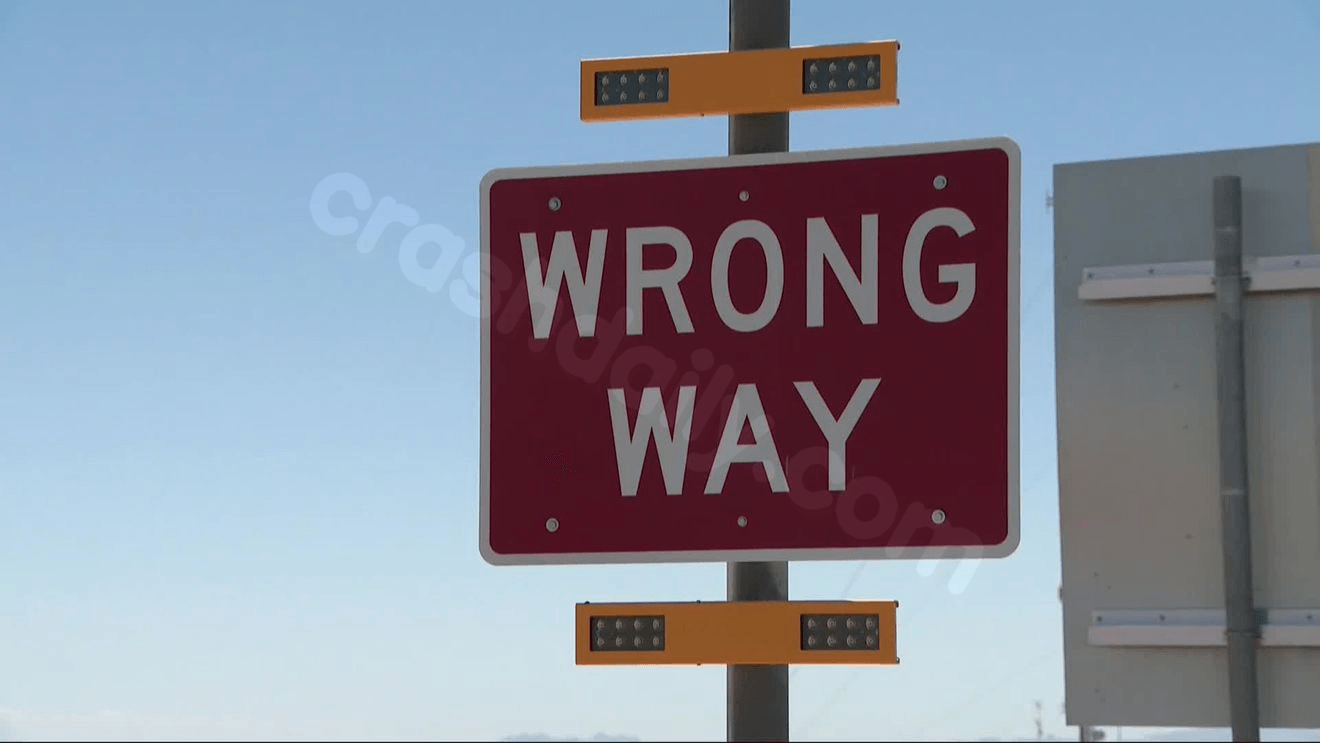
UNLV finds increase in fatal wrong-way crashes as Nevada expands prevention efforts
Fatal wrong-way crashes are increasing in Nevada, with Clark County accounting for the largest share of those deadly collisions, according to a new analysis from UNLV's Nevada Traffic Safety Research Center. Researchers reported 38 fatal wrong-way crashes killed 57 people statewide between 2017 and 2024. More than half of those crashes happened in Clark County with 23. Data were obtained from the Fatality Analysis Reporting System (FARS), a nationwide census of fatal motor vehicle crashes on public roads in the United States and maintained by the National Highway Traffic Safety Administration (NHTSA). The statistic showed the problem getting worse in 2024, with that year recording the highest number of fatal wrong-way crashes with 8 and deaths totaling 13 during the study period. Dr. Deborah Kuhls, chief of trauma at University Medical Center and associate dean for research at the Kirk Kerkorian School of Medicine at UNLV, said the findings reflect a growing public safety concern. "The trend on this data is that it's increasing," Kuhls said. Kuhls, who helped lead the research, said wrong-way crashes are among the deadliest collisions on Nevada roads because they often involve head-on impacts at highway speeds. "These are very lethal crashes and often involve the death of more than one person in a crash," she said. The analysis found impairment was a common factor in fatal wrong-way crashes. Depending on the year, between 60 and a100 percent of wrong-way crash drivers tested in Nevada showed signs of impairment from alcohol, drugs or both. Kuhls said impaired drivers often lack the judgment needed to safely navigate roadways and may mistakenly enter freeway exit ramps or travel in the wrong direction on divided roadways. "Sometimes the people who die are not the people who are intoxicated or impaired," Kuhls said. "It would be the other people who are encountering a wrong-way driver at high speeds." As researchers warn about the growing problem, transportation officials are expanding efforts designed to prevent wrong-way drivers from reaching freeway traffic. The Nevada Department of Transportation recently completed installation of new wrong-way driver alert systems along westbound Interstate 215 off-ramps at Las Vegas Boulevard, Warm Springs Road and Windmill Lane in May The technology uses radar and camera systems to detect vehicles entering freeway ramps in the wrong direction. If a driver is detected, flashing "Wrong Way" signs activate to get the driver's attention and encourage them to turn around before entering traffic. NDOT's latest performance report suggests the initial systems installed on I-15 at Starr Avenue, U.S. 95 / I-11 at Durango Drive, U.S. 95 / I-11 at Skye Canyon Park Drive and U.S. 95 / I-11 at Kyle Canyon Road showed early signs of success. Between July and December 2025, transportation officials documented 11 validated wrong-way. Ten of those drivers turned around before reaching freeway traffic, and none were confirmed to have entered the freeway in the wrong direction. The state is also investing in a broader expansion of the technology. Construction is has started on the $22 million I-11 SafeTech Corridor Project in central Las Vegas. The project will install 12 additional wrong-way driver alert systems at six interchanges along the I-11/U.S. 95 corridor, including Martin Luther King Boulevard, Rancho Drive, Valley View Boulevard, Decatur Boulevard, Jones Boulevard and Rainbow Boulevard. The project will also add advanced traffic management technology designed to improve traffic flow, incident response, and roadway safety along one of Southern Nevada's busiest freeway corridors. Kuhls said engineering improvements can help, but preventing impaired driving remains critical. "If you're drinking alcohol or engaging in substance, use that can impair your judgment, do not get behind the wheel," she said. Researchers hope the findings serve as a warning as Nevada's population continues to grow and traffic volumes increase. Kuhls said reducing impaired driving, combined with new roadway safety technology, could help prevent future wrong-way crashes and save lives. I-15 SB W Starr Ave: 4 Validated WWD Events I-11 SB Durango Dr: 2 Validated WWD Events I-11 SB Kyle Canyon Rd: 1 Validated WWD Event I-11 SB Skye Canyon Park Dr: 2 Validated WWD Events The state is also investing in a broader expansion of the technology. Construction is has started on the $22 million I-11 SafeTech Corridor Project in central Las Vegas. The project will install 12 additional wrong-way driver alert systems at six interchanges along the I-11/U.S. 95 corridor, including Martin Luther King Boulevard, Rancho Drive, Valley View Boulevard, Decatur Boulevard, Jones Boulevard and Rainbow Boulevard. The project will also add advanced traffic management technology designed to improve traffic flow, incident response, and roadway safety along one of Southern Nevada's busiest freeway corridors. Kuhls said engineering improvements can help, but preventing impaired driving remains critical. "If you're drinking alcohol or engaging in substance, use that can impair your judgment, do not get behind the wheel," she said. Researchers hope the findings serve as a warning as Nevada's population continues to grow and traffic volumes increase. Kuhls said reducing impaired driving, combined with new roadway safety technology, could help prevent future wrong-way crashes and save lives.
Leave a Comment
Popular News



Recent News




Weather

 77%
77% 1 MPH
1 MPH
-
 21° June 22, 2026
 -
27° June 22, 2026