
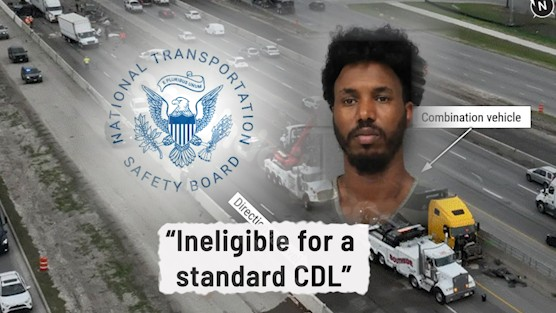
Deadly I-35 crash report: Staff issued wrong CDL, trucking company kept minimal records
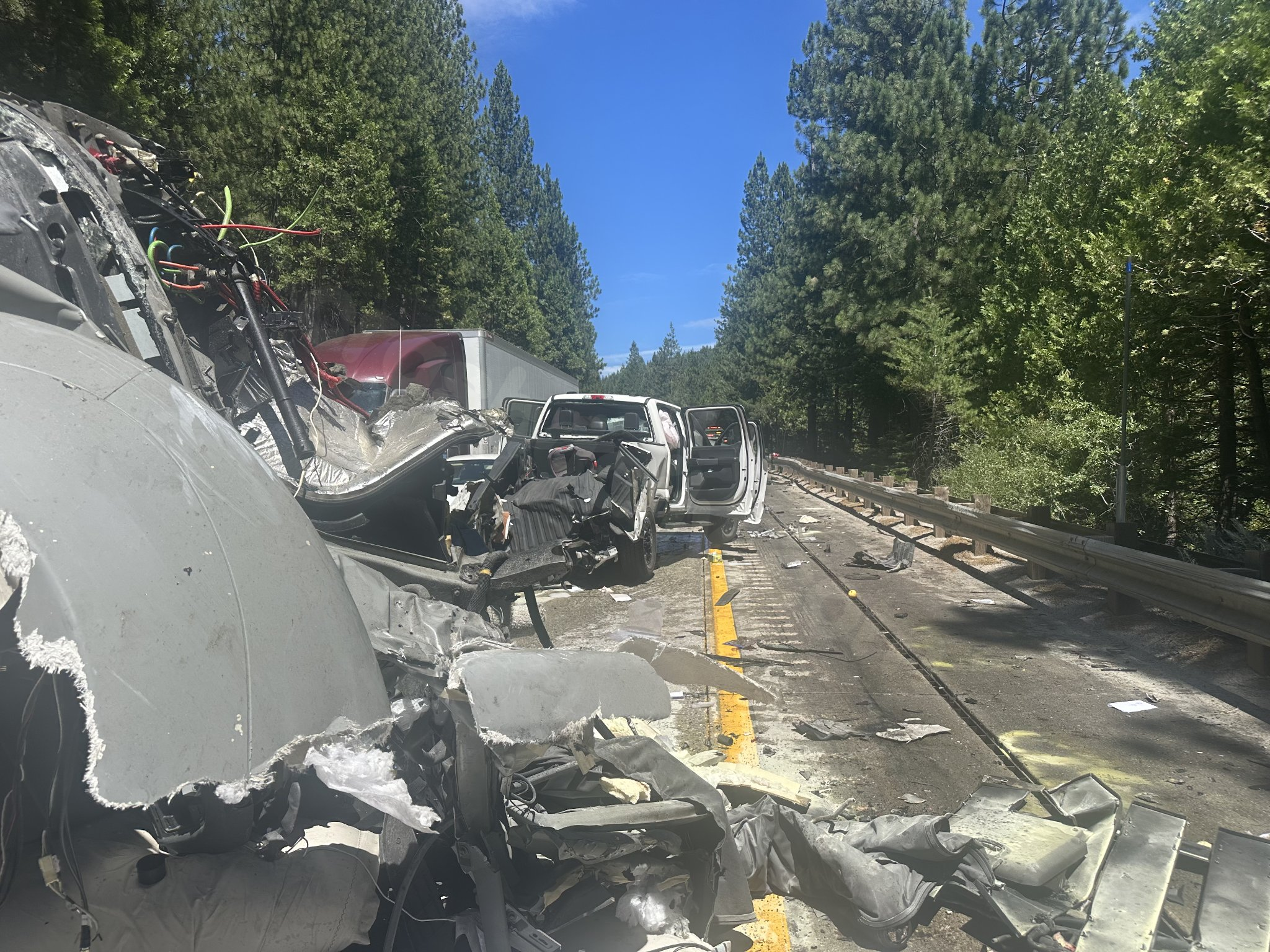
Editor's note: This video contains previous coverage of other findings in this report. Additionally, this report has been edited to clarify the Texas Department of Public Safety issued the driver's CDL. The NTSB incorrectly identified the agency in its report. AUSTIN (KXAN) -- A hundreds-page long report by the National Transportation Safety Board analyzing the March 2025 crash on Interstate 35 that killed five people found the driver of the semi-truck that caused the crash was issued an "unrestricted" commercial driver license (CDL), when he was supposed to receive one that expired the year before the crash. The crash happened on I-35 southbound near Parmer and Howard Lanes around 11:20 p.m. on March 13, 2025. Five people, including a baby and a child, died. Eleven others were hurt. Several witnesses described a semi-truck "plowing" through stopped and nearly-stopped traffic. This happened in a construction zone. The semi-truck driver, Solomun Weldekeal-Araya, faces felony manslaughter and aggravated assault charges in connection with this and is currently out on bond. His attorney Bristol Myers said the report shows this crash was "not a crime," rather a tragic accident. According to records found in the NTSB report, Weldekeal-Araya is in the U.S. a refugee. The report included a copy of his employment authorization card, a government-issued card that shows a non-citizen can legally work in the U.S., which had an expiration date of October 2022. The Federal Motor Carrier Safety Administration (FMCSA) determined when the the Texas Department of Public Safety (DPS) issued Weldekeal-Araya a CDL in 2021, the department should have given him a "non-domiciled CDL" that expired when his employment authorization card did. Instead, the state gave him a standard CDL that didn't expire until 2023. "FMCSA cannot speculate on what type of documentation the driver could have presented atsubsequent issuance events and thus what credential the crash driver might have beeneligible for at the time of the crash," the report states. In September, U.S. Transportation Secretary Sean Duffy announced new restrictions on who is eligible for trucking licenses, putting new limitations on people eligible for non-domiciled CDLs. Additionally, the report noted after Duffy made this announcement Texas "had suspended the issuance of non-domiciled CDL's until Texas could develop a proposed compliance plan to address" the new rule. As of Thursday morning, the Texas Department of Public Safety (DPS), had not responded to KXAN's questions about how the erroneous license issue happened or specifics on how the department is working to prevent this in the future. The report did note, however, "Texas did not recognize applicants who were in the United States as a refugee as a person who would meet the definition as a non-domiciled applicant and therefore issued a normal unrestricted CDL to those applicants if they meet the other qualification standards." KXAN has also reached out to the FMCSA about oversight of this process. Previous KXAN reporting of this NTSB report found details about the driver's cellphone activity an accounts from witnesses. A post-crash analysis of ZBN Trucking, the carrier that Weldekeal-Araya worked for, revealed a lack of formal records and lax oversight. The report said, "the owner stated that when he needed to hire a driver, he would reach out to someone in his Eritrean community and fill the opening," and there was no "formal" hiring process. The owner said applicants just needed a valid CDL — which Weldekeal-Araya had — as well as a clean motor vehicle record. Insurance would then screen the driver, the owner said. KXAN has reached out to an attorney representing the company but hasn't heard back. When we previously got in touch with the owner last year, he repeatedly said he did not wish to comment. The report also showed ZBN had no written record of drivers' road tests. "Once the owner was satisfied with the applicant's driving performance, the applicant was hired as a driver." The company is no longer in business, it could not obtain insurance after the crash. Data in the report from tracking technology inside Weldekeal-Araya's truck noted 36 instances of speeding and 10 instances of hard-braking in the two weeks leading up to the crash, and ZBN could not provide investigators with any records of corrective action or coaching following these infractions. KXAN also hopes to learn more from the FMCSA about oversight of trucking carriers — small carriers like ZBN in particular — and what can be done to ensure operations implement proper record-keeping, driver-tracking and other formal policies. The chart below outlines Weldekeal-Araya's acceleration and braking activity before and at the moment of the crash. Investigators noted he was going 69 mph the final seconds before the crash. The construction zone speed limit was 60 mph. Several witnesses told investigators the crash happened suddenly. "It was like a shark attack, you know, all of a sudden it was just — there’s nothing and then allof a sudden, you know, just the crash,” one witness said, according to their interview transcript in the report. Weldekeal-Araya faces 22 felony charges related to deaths and injuries from this crash. His next court date is currently set for May.
Leave a Comment
Popular News



Recent News



Weather

 76%
76% 6 MPH
6 MPH
-
 19° July 21, 2026
 -
 25° July 21, 2026