
Why are e-bike-related accidents on the rise in Southern California?
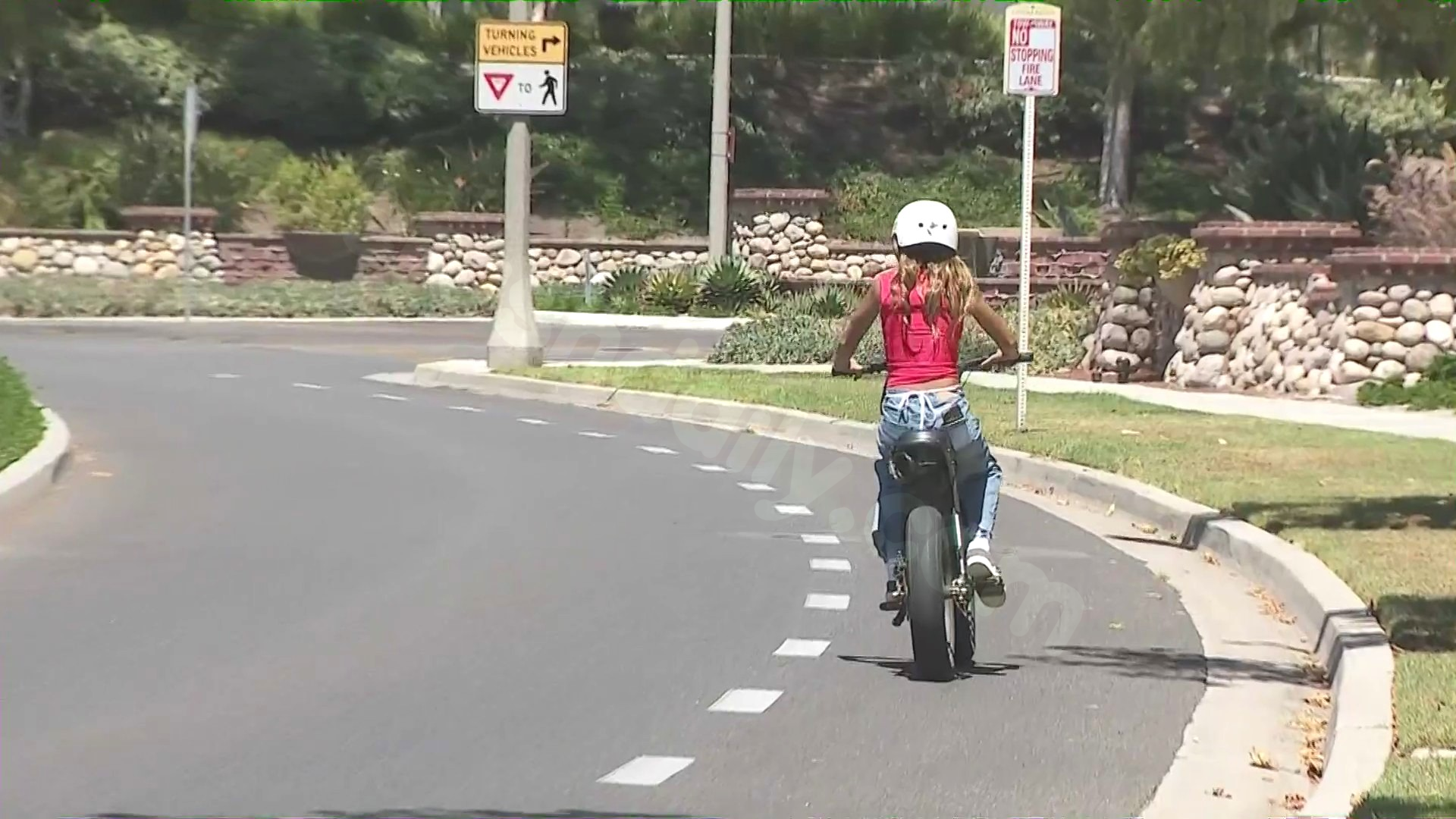
Emergency rooms across Southern California are seeing a rise in electric bike-related injuries and fatalities involving young riders. A pair of notable incidents last month, one involving a teen in Orange County who fatally struck an 81-year-old Vietnam War veteran while doing donuts on an electric motorcycle and another involving a Simi Valley boy who died after being hit by a train while riding an e-bike, have brought to light some of the dangers of juveniles riding motorized vehicles. KTLA spoke with Dr. Laura Goodman, pediatric surgeon and trauma medical director at Children’s Hospital of Orange County, to learn more about the increase in accidents and what can be done to prevent hospitalizations -- or worse -- from occurring. "The numbers are skyrocketing," Dr. Goodman said. "The number of e-bike traumas here have gone up 430% since 2022 ... we've seen [more than] 90 this year already if you add in the last week." "There are so many severe injuries and fatalities as well; it seems to have reached epidemic proportions here," she added. Dr. Goodman explained that trauma unit workers are often treating teens with injuries consistent with going more than 20 miles per hour on a motorized vehicle. She says that many of them are solo crashes, meaning no other parties are involved. "We see things our orthopedic surgeons have never seen before -- like a kneecap just [splitting] open -- to really severe head injuries and injuries that are not survivable," she said. California's laws on e-bikes, which have become tighter recently, break them down into three classes: Each class of e-bike is differently regulated. For example, there is no minimum age requirement for Class 1 or Class 2 e-bikes but there IS for a Class 3 e-bike: 16 years old. State law requires all e-bike riders under the age of 17, regardless of Class, must wear a helmet. For Class 3 e-bike riders, a helmet must be worn regardless of age. According to Dr. Goodman, the Class 2 e-bikes are the ones most often being modified to go faster, but Class 3 e-bikes can also be modified. "We've talked to a lot of patients who have done that to their bikes [whose] parents might not know," she said. "So it's something parents need to check to make sure that their [child's] bike is regulated. Kids are not allowed to go over 20 miles per hour if they are not at least 16." "Parents need to be vigilant about what bike their kid is getting on -- only age 16 and older can ride Class 3," she continued. "But we often see kids who are younger than 16 on Class 3 and we even see them in accidents related to electric motorcycles, which are not legal [for kids] at all." Electric motorcycles are regulated differently than e-bikes in California. According to the Department of Motor Vehicles, anything designated as a "miniature vehicle" (such as a mini chopper or pocket bike) cannot be registered or operated on public streets because they do not meet federal safety standards. The DMV lists electric motorcycles as off-highway vehicles that are subject to off-highway vehicle registration (OHV) and must display an OHV permit or plate. In order to qualify as an e-motorcycle, the vehicle must be designed for off-highway use, powered by an electric motor, have handlebars for steering, a straddle seat, two wheels, and no pedals. "Those ones can go up to 60 miles per hour," Dr. Goodman said of e-motorcycles. "We do know that higher speeds result in more severe injuries, and especially over 20 miles per hour, we have a higher suspicion that they are going to have severe brain injuries and lifelong disabilities." Motorized scooters, on the other hand, can be operated on public streets without registration; however, riders must be at least 16 years old and possess a valid permit or driver's license to operate one and they must wear a helmet, according to state law. Overall, Dr. Goodman implored that, regardless of the speed of the vehicle a child is riding, parents must emphasize safety at all times. She recommended getting the lowest-class e-bike to start out and urged all riders to use lights and reflectors as required by law. She also advised parents to tell their kids to ride as if cars cannot see them, especially when visibility is limited. "Make sure kids are going slow; that's the biggest thing I want to emphasize," Dr. Goodman told the KTLA 5 Weekend Morning News. "Stay under 20 miles per hour, make sure that the bike is not modified post-market -- which is now illegal anyway -- make sure they are always wearing a helmet and that it properly fits and that they actually strap it on. We know from our research that there is a reduction in the severity of head injuries when wearing a helmet; the most important thing is to wear it all the time." "They need to learn how to ride the bike safely. Know the rules of the road," she continued. "13-year-olds haven't taken driver's ed and they're riding with traffic on these e-bikes, so they need to be caught up to speed and learn the impact of a potential accident ... and follow all those rules they might not be aware of."
Leave a Comment
Popular News



Recent News



Weather

 76%
76% 6 MPH
6 MPH
-
 19° July 21, 2026
 -
 25° July 21, 2026