
Local father who lost fingers in fireworks accident shares warning ahead of Fourth of July
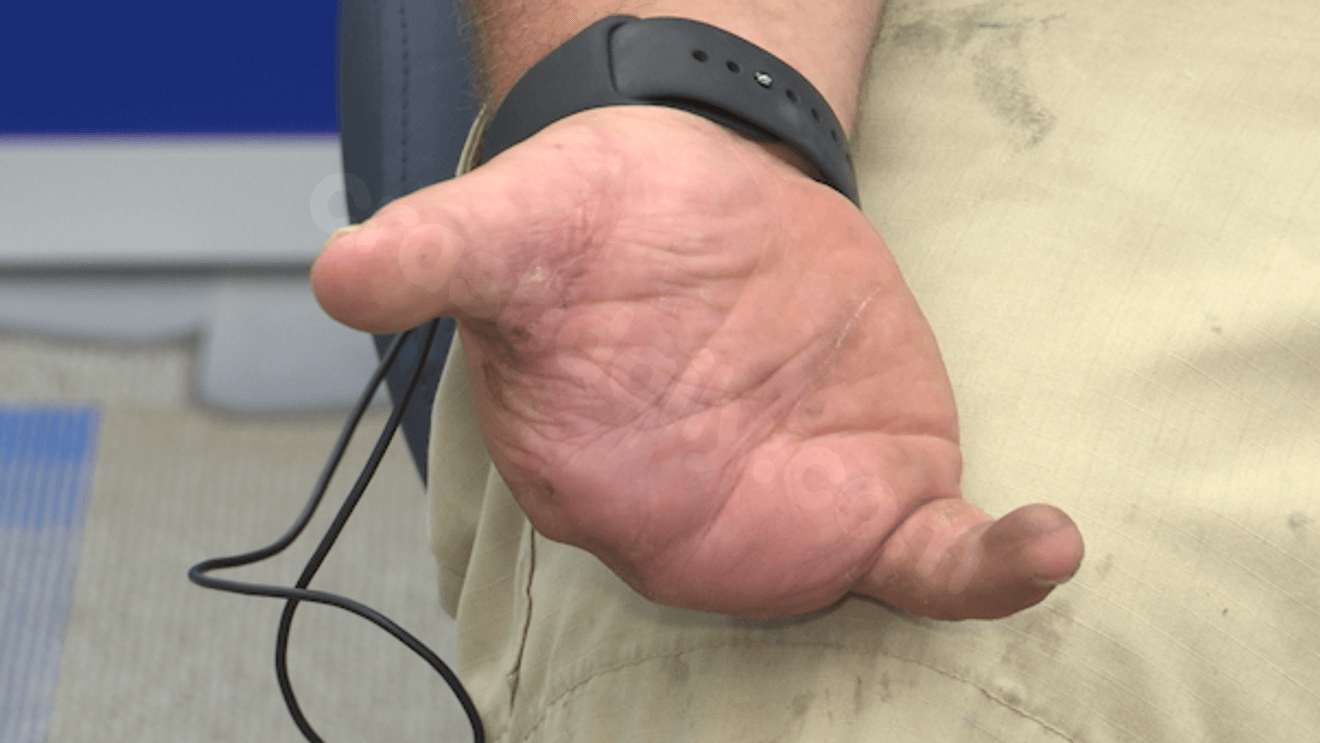
TULSA, Okla. — What started as a Fourth of July family celebration changed one Oklahoma father's life in an instant. Now, one year after a firework exploded in his hand, he's sharing his story in hopes of preventing another family from experiencing the same tragedy. "I've done the same thing hundreds of times," he said. "You don't think it's going to happen to you until it does." The accident happened during a family gathering while he was helping his nephew light fireworks. "I went out and grabbed a firework from my nephew. He was fixing to light one, and I went and lit it for him," he said. The firework had a fast-burning fuse. "As soon as I put it in my hand, it blew up in my hand." When he looked down, he immediately knew the injuries were severe. "As soon as it went off, I saw nothing but bones, the bones of my fingers." He quickly turned away from his family so his children wouldn't see the extent of his injuries. A family member applied a tourniquet before an ambulance arrived. "They got me fixed up and kept everybody as calm as possible," he said. "They had me in the operating room within about an hour." Doctors were able to save much of his hand, though he lost his three middle fingers on his dominate hand. "I thought I lost my whole hand," he said. "My hand surgeon was one of the best around, and she actually saved it to where I didn't have to lose any more than I needed." The physical recovery has been long and challenging. He spent nearly two months with his hand bandaged, attended occupational therapy several times a week and continues to be fitted for a new prosthetic hand. "It's taken quite a while," he said. "Not only that, mentally, it's been very, very hard at times." The injury affected nearly every part of his life. His dominant hand was injured, making everyday tasks like writing, mowing the yard and completing household chores difficult. Returning to work also took much longer than expected. "It's a life-altering thing, not just for me, but for my family as well." Despite the challenges, he says he remains grateful. "I feel very blessed that I didn't get injured more than I did, where I can still be here for my family and still provide for them." He continues coaching youth football and baseball while adapting to a new way of doing everyday activities. After the accident, his family decided they were done with fireworks. "We all said we weren't going to do it anymore." He says the emotional trauma has lasted long after the physical injuries healed. "PTSD is a real thing with this stuff." He recently tried buying sparklers for his youngest son but realized he wasn't ready. "Just the smell of the burning fireworks set my anxiety off." Instead of lighting fireworks this year, the family plans to spend the holiday indoors. His warning also comes as a new Oklahoma law expands when consumer fireworks can be sold. Beginning this year, licensed retailers are allowed to sell consumer fireworks year-round, instead of only during traditional holiday sales periods. While fireworks may now be sold throughout the year, consumers must still follow local ordinances governing when and where fireworks can be used. He worries the expanded availability could lead to more opportunities for accidents. "The thing with the new fireworks law being able to have fireworks all year round, there's more holidays, more parties, alcohol will be involved. It might be more dangerous." His story comes as federal safety officials warn that fireworks continue to send thousands of people to emergency rooms every year. According to the U.S. Consumer Product Safety Commission, at least 15 people died and an estimated 13,000 people were treated in emergency departments for fireworks-related injuries in 2025. About 1,300 of those injuries involved sparklers alone, which can burn at temperatures exceeding 2,000 degrees Fahrenheit, hot enough to melt some metals. The agency says people ages 15 to 24 accounted for the largest share of injuries, with burns to the hands, fingers and head being the most common. Many of the most serious injuries involved fireworks that malfunctioned, tipped over or were used too close to people. As millions of Americans prepare to celebrate Independence Day, the Consumer Product Safety Commission urges people to: Buy only legal fireworks from reputable retailers. Never let children handle fireworks, including sparklers. Keep a bucket of water or garden hose nearby. Never use fireworks while under the influence of alcohol or drugs. Light one firework at a time and move away quickly. Never hold fireworks in your hand or point them at another person. Never relight a firework that fails to ignite. Consider attending a professional fireworks display instead. For this father, those reminders come with a lifetime of experience. "They are dangerous. You don't think they are until something happens to you or somebody you know." While he can't change what happened, he hopes others can learn from it. "I just wish I had been a little more cautious, but I can't turn back time." His message to anyone celebrating this Fourth of July is simple: "Safety is number one. Be vigilant."
Leave a Comment

Popular News



Recent News


Weather

 24%
24% 4 MPH
4 MPH
-
 34° July 5, 2026
 -
40° July 5, 2026