
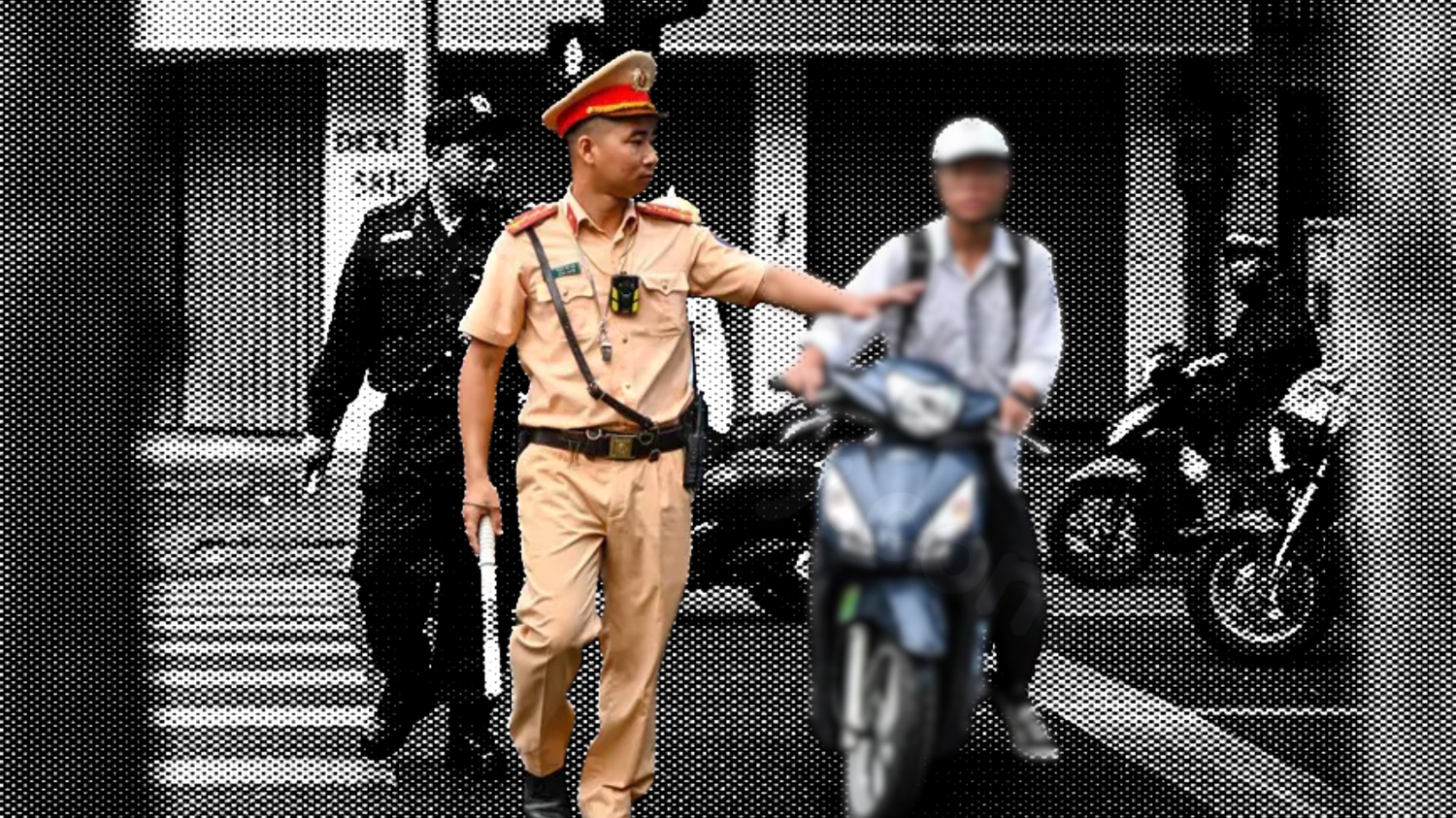
How I Witnessed Traffic Police Corruption in Việt Nam After a Minor Accident
“Those guys are only good at taking money from the public. Have you ever seen them help with anything?” “No wonder people hate the traffic police.” The remarks drifted from a nearby table inside the half-open café. No one was speaking particularly loudly, but as one person commented and another chimed in, a collective sense of irritation filled the air. I sat in a corner near the door, sipping iced coffee and catching fragments of the complaints. I hadn’t come just to listen to people curse the traffic police, though; I was in the exact same predicament. While a traffic accident is normally handled at a police station, several others and I had been directed by the police to this specific coffee shop—less than a hundred meters from the station gates—to wait for our cases to be “processed.” Out front, an empty lot was haphazardly filled with cars, their owners scattered inside. It quickly became clear that the location wasn't just a café. It felt more like a waiting room, and all of us were waiting for the same thing. The ordeal had begun earlier that morning. I was driving when the car behind me failed to keep its distance, resulting in a minor rear-end collision. With only light scratches on the vehicles, both parties quickly agreed to settle the matter ourselves. We were just getting back into our cars to leave when a traffic police cruiser pulled up. The officer stepped out, immediately recording the cars and the point of impact on his phone. When I explained that we had already settled the issue, he responded immediately: “What do you mean, settling it yourselves? Both cars come to the station. I’m making a report.” He confiscated our vehicle documents, returned to his patrol car, and drove off, leaving us no choice but to follow him to the station yard. Upon arrival, he informed us that another team would handle the report—this was apparently not his responsibility—and left us to wait. The sun was harsh that day. With no seats available, the other driver and I sought refuge under a small tree near the gate while police vehicles drove in and out. Nearly half an hour passed before another officer arrived with a black briefcase. He administered breathalyzer tests—both zero—looked at our cars, and said briefly: “Leave the cars here for now. Come back on Monday to work this out.” “Can you give us a report or an appointment slip?” I asked, surprised. “Come back on Monday.” Leaving the cars meant a forty-kilometer commute home for me, and a similarly difficult journey for the other driver, who had an elderly woman and children in his car. But things were taking a strange turn: no report, no appointment slip, and no official impound procedure, yet we couldn't take our cars. I called an acquaintance in the traffic police. “That station belongs to the central authorities. Local traffic police don’t have connections there,” he explained, before offering a blunt solution. “See if you can pay them something so they let you go. Otherwise, even by Monday you might not get your car back.” When the law is no longer in play, people are left with only two options: connections or money. I turned back to the officer and pleaded, “Please help us out.” He looked at us for a moment and said: “Alright, drive your car out to the road over there. There’s a coffee shop with parking space. Go sit there. Around 11 a.m., the leadership from the city will come down, and I’ll call you back in to settle this.” A minor collision requiring city leadership to make a report sounded absurd, but his next sentence clarified everything: “If your documents are in order, you just need to give five bottles.” Five "bottles"—five million đồng. Pay that amount and both of us could leave. We drove to the designated coffee shop. The young female owner wasn't surprised to see us. “Did the officers at the station just tell you to bring the cars here?” she asked directly. I nodded. “Then you’ll get your cars back. If they were really going to impound them, they’d have taken them to the impound lot already.” As we waited, the café filled up with people carrying the exact same story: no report, no slip, just an order to leave their vehicles and wait. Close to noon, I walked back to the station and found the officer drinking tea in the yard. “I have five million for you to have coffee,” I told him. He replied calmly: “Wait a bit. I was on night duty yesterday. Let me take a nap first, and we’ll deal with it afterward.” He walked upstairs, leaving me stunned by the sheer absurdity of waiting for a corrupt official to finish his afternoon nap to accept a bribe. I returned to the café. Early that afternoon, he reappeared in civilian clothes, driving a car and carrying a thick bag of confiscated vehicle documents. After a quiet word with the café owner, a smooth, unspoken system took over. One by one, people handed money to the owner and received their papers back, all under the officer's watchful eye. Papers in hand, I got into my car. As I started the engine, I glanced back down the street. Several more vehicles were just pulling out of the station yard, heading straight for the coffee shop. Articles in the Opinion Section represent the author's personal perspective and do not represent the views of the editorial board. Author KHANGTHUHAI wrote this article in Vietnamese and published it in Luật Khoa Magazine on March 10, 2026. Đàm Vĩnh Hằng translated it into English for The Vietnamese Magazine.
Leave a Comment

Popular News



Recent News


Weather

 34%
34% 8 MPH
8 MPH
-
 25° June 17, 2026
 -
31° June 17, 2026