
Family's experience highlights the dangers of texting and driving
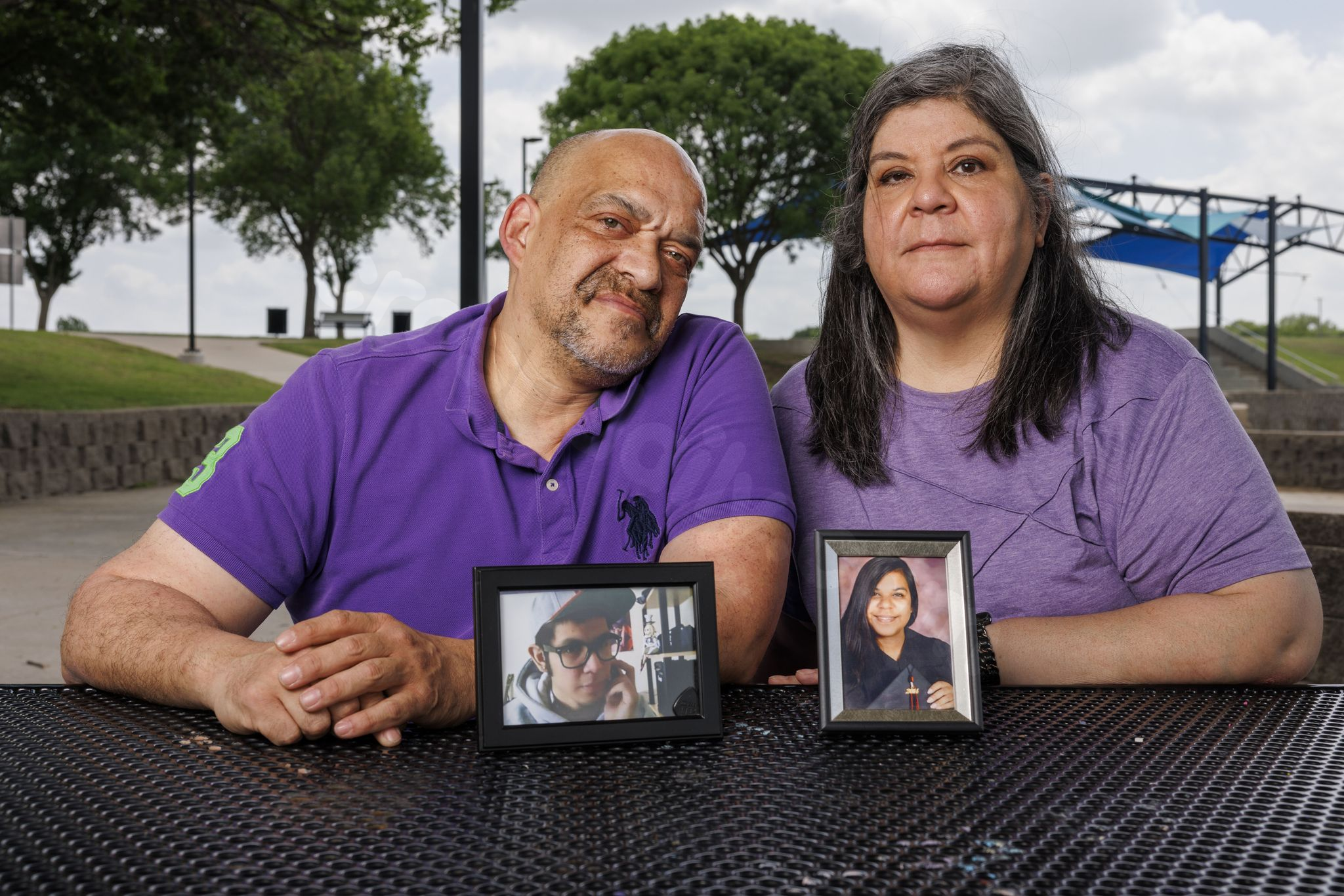
Dee Devilla-Estelle sat in the passenger seat of her red Ford Fusion and kept repeating to herself, “this isn’t real.” Only able to take small gasps of air, she struggled to remain conscious. On Dec. 21, 2015, Dee, her husband Kevin, their three children and their dog were involved in a fatal car crash on Interstate 35W near Fort Worth. They had gone to see Christmas lights at Texas Motor Speedway and were on the way home, trying to decide what to eat for dinner. The force of the crash caused Dee’s glasses to end up on the dashboard, blurring her vision. Looking over, she saw her daughter Gabbi’s figure, hunched over the middle console. Dee tried to nudge her and wake her, but it hurt to move. “I think I knew Gabbi was gone,” Dee said. “When I looked at her, all of her hair was in her face, but her eyes were open. I could see her eyes, I knew they were open.” Dee, who was a nurse at the time, instructed her husband to check her son Alex’s pulse. Kevin said he couldn’t find one. Exasperated, Dee told him he was doing it wrong but was unable to move and do it herself. Gabbi, 19, and her older brother Alex, 23, were killed on impact after a car rear-ended their family going more than 70 mph. The impact caused the roof of the car to cave in, killing Alex instantly. “When I was checking his pulse, the roof of the car and his head were meeting,” Kevin said. “I went to feel it and there was nothing.” Dee had broken or cracked all her ribs. Kevin broke a few ribs and fractured his spine, and their son Zachary, 18 at the time, suffered cuts and bruises. Police told the family the car was sent 360 feet forward and did not hit any other vehicles on the interstate. “I told the EMT that was working on me 'this isn’t real,' ” Dee said through tears. “This isn’t how our story ends.” April is Distracted Driving Awareness Month, and the Texas Department of Transportation hopes stories like Dee’s will help people understand the hazards of texting and driving. After the crash, Dee joined other families involved in similar crashes to lobby for change in Austin when no laws against texting and driving existed. Because of their efforts, a statewide texting and driving ban went into effect in 2017, almost two years after Dee's children were killed, with violators facing a fine of up to $200. Distracted driving is the second-most common reason for traffic accidents in Texas, accounting for 86,384 crashes in 2025. TxDOT is reaching out to motorists this month through commercials, billboards and a mobile exhibit featuring a driving simulator that brings the dangers of distracted driving to life. “When you’re behind the wheel, you should be completely focused on just one thing: driving,” said TxDOT Executive Director Marc Williams. “Road hazards and obstacles require quick thinking and reaction time, and just a few seconds can be the difference between life and death. I promise that text message or bite of food can wait.” The driver who hit Dee's family suffered no major injuries. Initially, the driver denied allegations of distracted driving, saying he was looking out the window or fiddling with the radio. Dee said he admitted more than a year after the accident that he was texting and driving. "We went out as a family of five and came back as a family of three,” Dee said. Officers told the family they did not take the driver’s phone after the accident because the law did not allow it at the time. Two minutes before the accident occurred, records show the driver received a text message and was in the process of responding. “He took two lives,” Kevin said. “He got behind the wheel, texting on the freeway and killed two people. [Gabbi] will never have any kids, and neither will [Alex]... He took so much from me, from both of us.” Sitting under a pavilion in Capp Smith Park, Dee and Kevin laughed at how cliche they sound saying Alex and Gabbi were good kids, but insisted it was true. The family would come to the park often to train and participate in local fun run events. The family called Alex “Tender Heart” when he was growing up. As he got older, Alex got more involved with music. He played the guitar, piano, drums and accordion. Before his death, Alex was pursuing a career in music, writing songs and playing in a band. “Any type of music, he loved,” Dee said, laughing as she recalled the memory of her oldest son. “Even when he was walking around with no guitar, he’d be playing the air guitar. I’d ask him, ‘What are you doing?’ and he’d say, ‘I’m thinking about a song’.” Dee referred to Gabbi as her best friend and “a five-foot-zero ball of fire”. “I lived vicariously through her life because she was just so fun,” Dee said. “She was so fun.” Gabbi attended the Art Institute of Fort Worth to pursue a career in photography, and worked at a Walgreens in Haltom City. Growing up, she took photos of everything, expressing her “artistic vision.” More than 10 years have passed since the crash. Healing has not been a linear process, but Dee and Kevin managed to pick up the pieces and carry on. Kevin said the three of them became closer after the crash than they had ever been before. Working with TxDOT to share their story has been a part of Dee’s healing process. "When I saw my children in that coffin, I told them I was going to be their voice,” Dee said. “I’m not telling you my story for sympathy, I’m telling you my story because I don’t want you to be the next person to have to tell your story. I don’t want you to have a story.”
Leave a Comment
Popular News


Recent News




Weather

 61%
61% 3 MPH
3 MPH
-
 24° July 20, 2026
 -
 30° July 20, 2026