
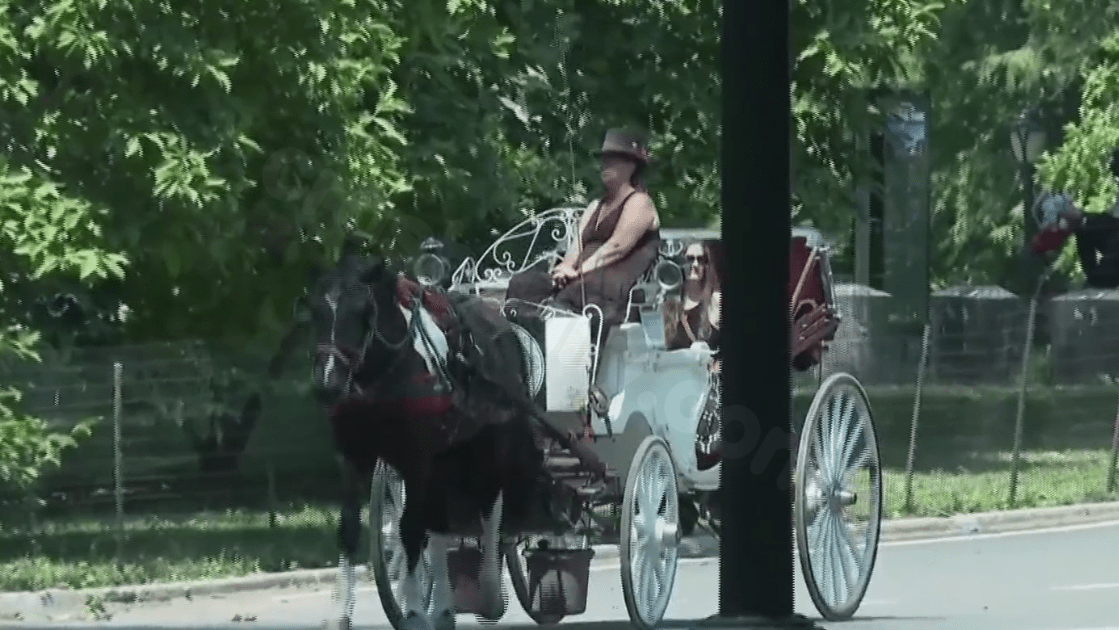
Central Park carriage drivers announce safety plans after fatal crash
CENTRAL PARK, Manhattan (PIX11) — Horse-drawn carriage rides resumed in Central Park on Tuesday after a pause following a fatal accident the previous week. 18-year-old Romanch Mahajan and his family were visiting the city and took a carriage ride Last Wednesday. He died from injuries sustained in the crash after the horse was startled and ran. Carriage drivers and industry representatives announced safety measures Tuesday and said this was the first fatality to their knowledge. Among the changes, drivers will no longer stop to take photographs of their passengers while rides are underway. The drivers participated in a refresher safety course. “No one should be in the carriage unless there’s a driver in the box,” said carriage driver and industry representative Christina Hansen. “There won’t be any stopping to take pictures of people in carriages.” The New York Police Department continues to investigate the incident. No developments had been announced as of Tuesday. Samson, the 7-year-old horse involved in the crash, will not return to work in Central Park, and the carriage operator involved in the accident is suspended pending the investigation. Industry representatives also expressed condolences to the victim’s family. Supporters view the rides as a historic New York tradition, while critics say the service no longer belongs in a modern urban environment. “It’s hard to watch the horses every day go through something they have no choice in,” said Victoria Harmon, a Manhattan resident and frequent visitor to Central Park. Horse-drawn carriages have been a part of Central Park since the park’s creation in the late 1850s. Another visitor called it "an important part of the city's history and all the horses appear to be well cared for." The city regulates the carriage industry through licensing requirements, driver training standards, health regulations for horses and city-issued medallions for carriage owners. Following the recent accident, drivers are also calling for additional locations along approved park routes where horses can be safely tethered or hitched while tourists take photographs. “We hoped there would be a conversation about the park and where tourists stopped for pictures. Dead silence,” said Pete Donohue of the Transport Workers Union, which represents carriage drivers. The debate is expected to continue at City Hall. Two City Council bills are scheduled for hearings in July. One proposal would ban horse-drawn carriages in the city. NYC Council Member Christopher Marte has renamed Ryder's Law to "Romanch’s Law" for the tourist killed in the crash. “No amount of safety measures can change the basic reality that horses can spook and bolt in an instant. It only takes one second for a horse to become impossible to control in a crowded public park, and that is how tragedy happens. Last week’s fatal crash made clear that the issue is not a lack of small reforms, it is that horse-drawn carriages are inherently unsafe in New York City. The Council must pass Romanch’s Law and end this industry while creating a real transition for workers into safer, stable jobs," said Simon Kostelanetz, a spokesperson for Marte. The office of NYC Counilmember James Gennaro said it expects its legislation will also be heard in committee in July. It would increase regulations, add safety measures and create more hitching locations within Central Park. It's supported by the drivers. Opponents of the industry say the horses face challenges in Manhattan’s busy environment. Earlier in June, a horse died after eating a poisonous plant. “I’m not against carriage horses or work horses,” said Michael Petrelli, an equine advocate who came to observe the carriages on Tuesday. “I’m opposed here. It just doesn’t work. It’s Manhattan. There’s no sensitizing an animal to this environment.” Supporters argue that any discussion about safety in Central Park should extend beyond horse-drawn carriages. They point to concerns involving electric bicycles and other park traffic. “If we’re going to have a discussion about safety, it needs to include everyone in Central Park,” Hansen said. The future of the industry has implications for about 150 people employed in the carriage horse industry.
Leave a Comment



Popular News


Recent News

Weather

 34%
34% 0 MPH
0 MPH
-
 23° July 5, 2026
 -
29° July 5, 2026