
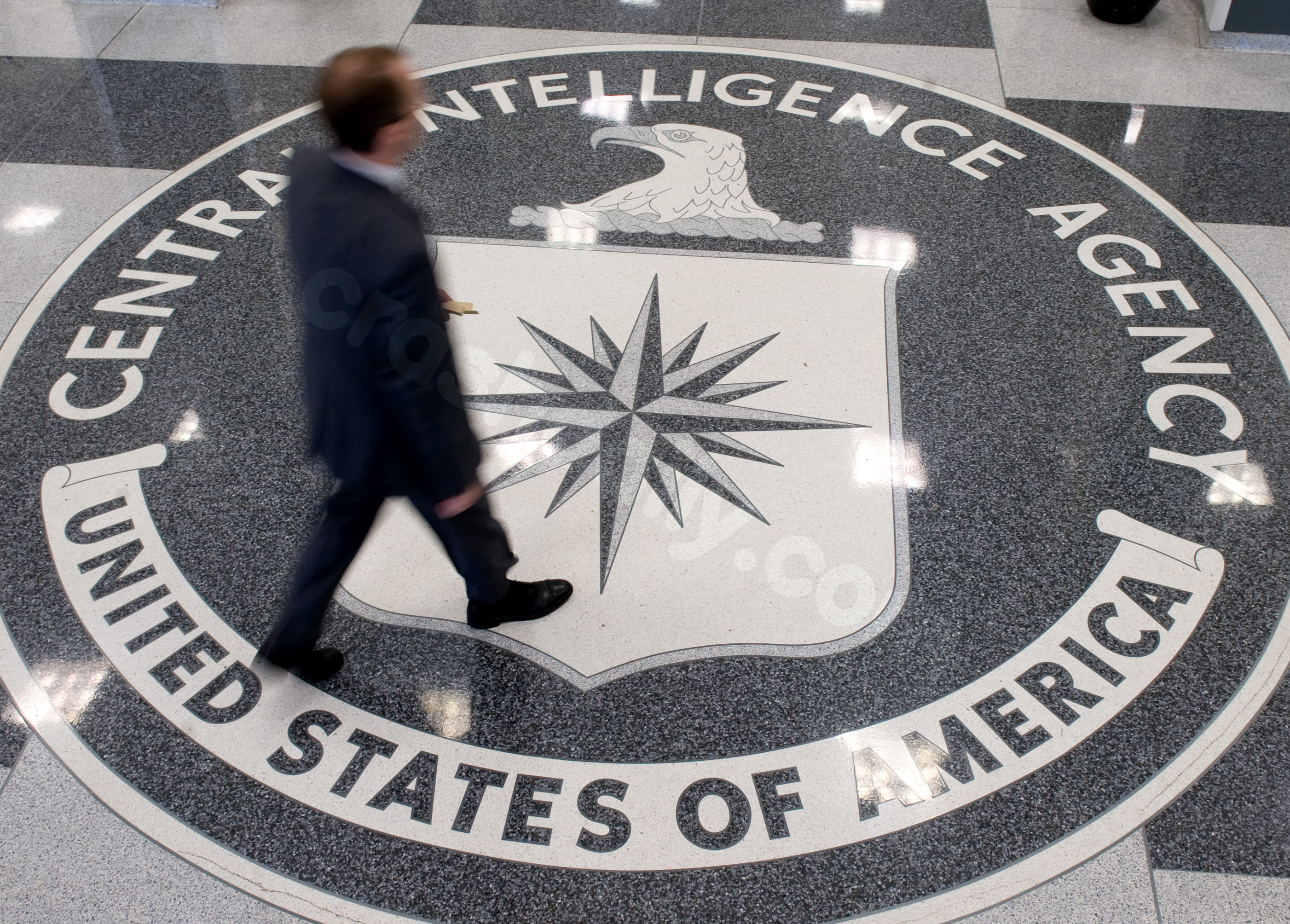
What were CIA agents doing in Mexico before fatal crash?
(NewsNation) — The Central Intelligence Agency’s reported involvement in the dismantling of a clandestine methamphetamine lab in Mexico continues to raise questions about its activity in combating cartel criminal operations south of the border. On Monday, a state prosecutor in Chihuahua announced new findings in the investigation into a deadly automobile crash that killed two Americans along with two Mexican officials April 19. Since the crash, the two U.S. citizens have been identified as CIA agents who were working with state police officers in Chihuahua to destroy the meth lab, The Associated Press reported. The agents were not named by the AP or the CIA. Wendy Paola Chávez, a Chihuahua state prosecutor, told reporters that four foreigners were at the scene during the raid of the meth lab but did not specify if the other two foreigners were Americans or members of the CIA. Mexican President Claudia Sheinbaum insisted the U.S. had not informed her of any U.S. involvement in the Chihuahua drug operation being conducted by state police in that region of the country. Not doing so violates a 2025 agreement between the two countries to partner to fight cartel drug trafficking operations. On Monday, however, Sheinbaum expressed interest in moving past the controversy, telling reporters she hoped the case was an isolated incident and that “a situation like this never happens again." The CIA has continued to decline to comment on the incident or on U.S. involvement in Mexico, including when contacted by NewsNation on Monday. Sheinbaum again called Tuesday for an inquiry into the presence of the U.S. agents, which will likely involve defining what connection the two Americans who were first identified as U.S. Embassy employees had to the Mexican investigation into the meth lab. The Mexican president told reporters that the Trump administration has pledged to provide information about the U.S. agents' presence in Chihuahua after a diplomatic note was sent to Washington last week. The White House referred NewsNation to the CIA when contacted about the administration's planned response to Sheinbaum. “It’s hard to tell the reality of what actually happened," Jonathan Gilliam, a security expert and former Navy SEAL and FBI special agent, told NewsNation on Monday. "What is apparent is that the U.S. is continuing its push towards the fight against the cartels, and that we are working with Mexican state and federal authorities.” Chávez tasked with reviewing the death of the four men, announced Monday the two U.S. agents were not formally part of any state police operation, the El Paso Times reported. She added the agents’ presence in a police convoy investigating the meth lab was not reported to police officials and that they remained “limited, confidential and without direct operational interaction. The only exception to that was with the director of the state investigations agency in Chihuahua and his personal security detail," the newspaper reported. Chávez also reported that the U.S agents did not carry guns and wore civilian clothing that did not include any official insignia of any police or federal agency. The agents also kept their faces covered for most of their time with local officers, she told reporters. Gillliam told NewsNation that the CIA has previously used a car crash as a cover story for the deaths of federal agents working on an agency operation. More intriguing in this case, he said, was the fact that the two agents were with the director of Chihuahua’s state investigative agency and one of his employees when the deadly crash occurred. Without CIA confirmation or denial of the agents' involvement in Chihuahua, however, accurately pinpointing how active the agency remains in Mexico remains difficult. The Trump administration has been clear about its intention to combat Mexican drug cartels and has called on Mexico to get a better handle on cartel crime and government corruption within the country. “President Trump has been clear that Mexico must do more to combat the scourge of violent, drug-trafficking cartels, which not only threaten the national security of the United States, but continue to wreak havoc in communities across President Sheinbaum’s country,” White House spokesperson Anna Kelly told NewsNation Monday in a response to an inquiry about government corruption linked to the cartels. Earlier this year, Mexican officials credited the CIA for providing critical intelligence in a raid that led to Mexican drug lord Nemesio Oseguera, commonly known as "El Mencho," in February. Oseguera, the leader of the Jalisco New Generation cartel, was killed by Mexican special forces who received intelligence from a U.S. military-led task force, which was established to identify, disrupt and dismantle cartel operations posing a threat to the United States. While information-sharing between U.S. and Mexican agencies falls within the confines of the 2025 agreement, the active presence and activity of agencies like the CIA do not despite a shared commitment to fighting cartel activity. Ronald Johnson, the U.S. ambassador to Mexico, said in a statement to The New York Times that both countries have a common foe, referring to criminal organizations that operate on both sides of the U.S.-Mexico border. "Families on both sides of the border want the security and safety that only working closely as partners can deliver," Johnson said in the statement. Johnson's office did not respond to a NewsNation request for comment on the CIA's reported activity in Mexico. The Mexican Security Cabinet, citing immigration records, said over the weekend that neither of the two U.S. citizens killed in the crash was accredited to be working on investigations in Mexico. Mexican officials said that one of the two entered the country as a visitor without authorization to work, while the other had a diplomatic passport. The records also showed that the Mexican government, various institutions that make up Mexico’s security cabinet nor the Ministry of Foreign Affairs had knowledge that “foreign agents were operating (in Mexico) or would physically participate in any operational action within national territory.” Security Cabinet officials said Mexican law prohibits foreign agents from working on official operations within Mexico. Cooperative efforts between Mexico and foreign countries are carried out through information exchange and coordination between agencies, “always with absolute respect for national sovereignty, reciprocity, mutual trust without subordination.” The characterization of the two American agents’ involvement led to Chihuahua Attorney General Cesar Jauregui to resign Monday after he admitted to providing what he called “inconsistent” information to the public since the deadly crash. Jauregui initially said that there was no foreign involvement by U.S. agents, saying instead that the two Americans were “instructors” who were giving drone lessons in the mountainous region. He said that the two agents then managed to catch a ride with the police convoy. In his resignation letter, Jauregui said that his mischaracterization of events overshadowed government efforts to go after cartel drug operations. "Unfortunately, these events have overshadowed an achievement of the utmost importance: the destruction of one of the largest drug labs in our country's history; an action that represents a major blow to the capabilities of organized crime," Jauregui said. NewsNation's Diana Falzone and The Associated Press contributed to this report. Jeff Arnold is an enterprise reporter for NewsNation Digital covering immigration issues from the border to cities across the country. Send him story ideas at [email protected].
Leave a Comment
Popular News


Recent News


Weather

 51%
51% 4 MPH
4 MPH
-
 26° July 20, 2026
 -
32° July 20, 2026