
Utah Avalanche Center releases report on fatal snowmobiling accident
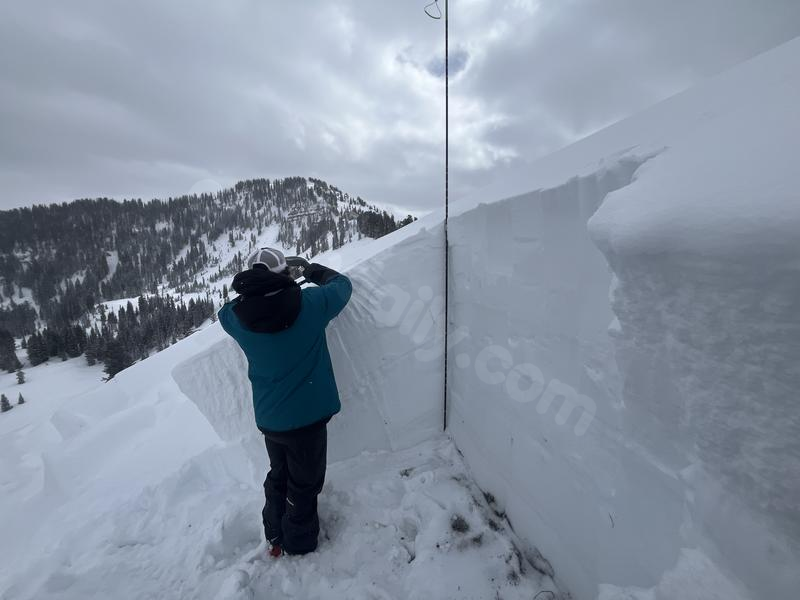
WASATCH COUNTY, Utah (ABC4) — The Utah Avalanche Center (UAC) finalized an accident report for the avalanche that killed a man after a father and son had been stuck snowmobiling. On Feb. 18, a father and a son were snowmobiling just north of Ant Knolls. According to the report, the father got stuck in a small bowl lower on the slope. When his son went to help, he also became stuck nearby. Suddenly, an avalanche started, catching the father and his snowmobile, and carrying it approximately 300 feet downhill. The man came to a rest against a tree, but was buried under about two feet of snow. The son immediately began searching for his father while calling 911. A Wasatch County Search and Rescue team member explained how to use his transceiver so he was able to locate his father. He was able to partially unbury him, but unfortunately, he was already deceased. Wasatch County Search and Rescue was able to arrive on scene and transport both the father and the son off the mountain. UAC explained that the terrain where the avalanche occurred is east-northeast facing and has steep slope angles between 33 and 40 degrees. According to UAC, "It is possible a collapse propagated uphill from their location, triggering a large, soft-slab avalanche from above." The wind loading in the area causes the upper part to be thicker than the lower half. The slab traveled nearly 700 vertical feet downhill, leaving behind about two to eight feet of semi-soft deposition. The report explained that half the height of the snow pit was new snow from Feb. 17 and 18. The report continues by saying, "The slab was very connected and, lower down the slope, wrapped around a subtle aspect change and pulled out more snow out of sight to the looker's left." The father was stuck in the lower bowl, right below the steep slope, when the avalanche started. The UAC report shares maps of the trail, burial, and avalanche crown location. Additionally, a photo shared outlines the boundaries of the avalanche. This is pictured below. The 2025-2026 winter is one of the driest winters on record. The weeks leading up to the accident, the snow cover on the mountain was shallow and in shady areas. Early January brought 18-24 inches of snow, but afterwards, there was no weather movement. The dry weather resulted in a weak and faceted surface and a fragile snowpack structure. Eventually, Feb. 11-12, the Central Wasatch welcomed 10-12 inches of snow. The report explains, "While this improved riding conditions, it also highlighted just how unstable the snowpack had become, with numerous human-triggered and remotely triggered avalanches reported." The UAC issued an Avalanche Watch starting on Monday, Feb. 16, just ahead of a forecasted series of storms. Feb. 18 escalated the Avalanche Warning for extremely dangerous backcountry conditions. The warning urged people to avoid posted avalanche terrain. The report shares that by the time of the accident, the mountains received approximately two feet of snow with 2-2.5 inches of snow water equivalent (SWE), compared to previous storms reporting approximately 1 inch of SWE. Gusts of wind blowing from the south and west reached up to 80 mph. According to UAC, "The avalanche failed at the top of our Dry January Layer (DJL), a thick, weak layer of facets that developed at the surface during the extended January dry spell." These facets were measured at about 2-3 mm. A majority of the slab was from previous snowstorms. Warm weather made the layer denser. The slab was relatively soft, but still stiff enough to potentially permit a trigger from around 400 feet downslope. UAC Director Paige Pagnucco and UAC Avalanche Forecaster Trent Meisenheimer visited the site on Feb. 19, as well as the Wasatch County Search and Rescue members, to retrieve the father's snowmobile. The propagation distance from the father's stuck snowmobile was approximately 400 vertical feet uphill. It was confirmed that the January dry spell formed a weak layer of facets. UAC confirms, "The avalanche danger for that area was rated HIGH that day with an Avalanche Warning in place." The report finalizes with the following statement: At the Utah Avalanche Center, we strive to learn from every avalanche incident and share insights to help others avoid similar accidents. We have all experienced close calls and understand how easily mistakes can happen. Our goal with this report is to provide a valuable learning opportunity, and we all aim to learn from accidents like this, without in any way pointing fingers at victims. Thank you to Wasatch County Search and Rescue and the Wasatch County Sheriff's Office for providing closure to this individual's family and friends. Our heartfelt condolences go out to the victim's family, friends, and all those in the community affected by his loss.
Leave a Comment

Popular News


Recent News


Weather

 83%
83% 6 MPH
6 MPH
-
 18° July 20, 2026
 -
 24° July 20, 2026