
Driver sentenced in crash that killed HSE football player
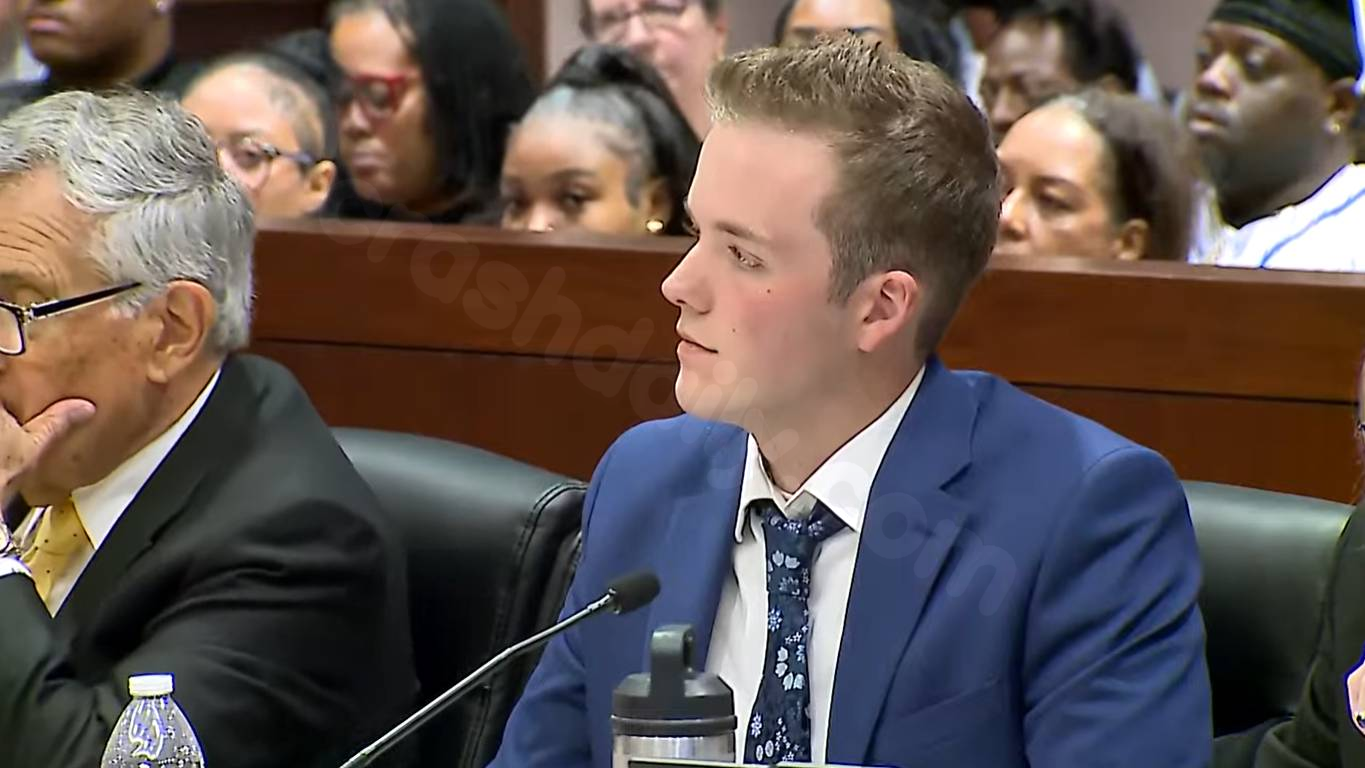
HAMILTON COUNTY, Ind. – The teen driver charged in the death of a Hamilton Southeastern High School football player learned his sentence on Tuesday. Trey Williams was behind the wheel during the fiery crash that killed Mason Alexander. His plea deal was filed in February. During Tuesday's change of plea/sentencing hearing, Judge Andrew R. Bloch sentenced Williams to a total of six years, with three years in the Indiana Department of Correction, one year on Hamilton County Community Corrections work release and two years of probation. He will be required to undergo a substance abuse evaluation and perform 30 hours of community service. In addition, Williams' driving privileges will be suspended for a period of five years. He can apply for early restoration of those privileges after 2.5 years. The sentence was in line with what prosecutors had requested. The crash happened on March 1, 2025. According to investigators, Williams was going 56 mph in a 35-mph zone when he tried to pass another vehicle in a no-passing zone and lost control. The vehicle veered off the road, slammed into a tree and burst into flames. Alexander died as a result of the crash. A star football player at HSE, he had a scholarship to play football at the University of Pittsburgh. Williams, who was 17 at the time of the incident and is now 18, was charged as an adult and faced a felony count of reckless homicide along with misdemeanor counts of reckless driving and false government identification. He pleaded guilty to the reckless homicide count, a Level 5 felony. The other two counts were dismissed as part of the plea agreement. Tuesday’s hearing included victim impact statements from four people: Alexander’s mother, uncle, grandmother and sister. Kelly Harris, Alexander’s mother, delivered a statement in which she said her son was home from spring break. She said she’d met Williams only one other time and didn’t consider him one of her son’s close friends. “My son paid for your decisions with his life, and I didn’t even get to say goodbye,” she told the court. Harris said Williams had engaged in a pattern of reckless and destructive behavior, alluding to past substance abuse issues. She said no one from his family had expressed remorse for what happened, although Williams’ attorneys said they had advised him not to reach out to Alexander’s family. Harris said Williams came from a background of privilege, and her son was dead because of his poor choices. “While I visit a grave, you visit loved ones,” she said. “I will live the rest of my life without my son.” Rahvy Murray, Alexander’s uncle, spoke second. He said the crash devastated the family, and the call he received on March 1 was “seared” into his memory. He encountered a scene of devastation and never got to say goodbye to his nephew. He noted that Alexander never got to set foot in a college classroom and said his family should never have had to endure the pain caused by Williams’ reckless behavior. “I wish for you to become a better man, a better person,” Murray said, addressing Williams directly. “Learn from this and become a better man.” The family keeps Alexander’s football helmet in a place of honor at home and will never forget him. “That dirt that they threw on him, that’s on him forever,” he said. “That’s eternity dirt.” Nancy Fortner, Alexander’s grandmother, spoke next. She described the past 13 months as the hardest year of her life. She’s a cancer survivor and stated that her treatment and recovery paled in comparison to the pain of losing her grandson. She described Alexander as a high achiever who loved his life, his family and his friends. As she spoke about her grandson, Williams could be heard crying. She gave him grace. “I forgive you, with everything in my heart and who God is,” she said. “I prayed, and I will continue to pray for you.” While nothing can bring back her grandson, she hoped the crash would serve as a wake-up call for Williams to change his life. She quoted Psalms 145:14: “The Lord upholds all who are falling, and raises up all who are bowed down.” “We have all made mistakes in our lives,” she said. “But the grace—please learn from this. God bless you and your family.” The final impact statement came from Alexander’s sister, Jai. She recounted how she was looking forward to spending time with her brother during spring break. Her brother’s death—which she learned about through apologetic text messages from friends—made her life less worth living. She wished it had never happened and said the family deals with the pain every day. Like Fortson, she chose to forgive. She hoped Williams would turn his life around. “Life’s short. You don’t have all your life to do this,” she said. “Hopefully, since you still have your life, you’ll use it well.” Williams’ attorneys, James Voyles and Jennifer Lukemeyer, also spoke to the court. They described the crash as a poor choice from a 17-year-old who didn’t consider the consequences of his actions. They said Williams wanted to apologize and express his deep remorse to Alexander’s family. On their advice, however, he didn’t. Voyles asked the family not to blame Williams for that because they were trying to protect him. Lukemeyer asked the judge to craft an appropriate sentence because she believed Williams is redeemable. She said he’s capable of remorse and empathy, adding that the crash has forced him to mature quickly. Voyles said justice and punitive action must be balanced. Williams took the stand to address Alexander’s family and deliver an apology he said he’s wanted to make for more than a year. He said the last 13 months of his life have been “the worst”—not because of the legal proceedings but because of what he did. “Mason wasn’t just someone in the car that night,” he said. “He was my friend.” Battling his emotions, he said he thinks every day about how Alexander should still be here and his role in his death. The family lost their loved one because of his poor decisions, he said. “A family lost their son, someone they cared for and loved being around, and I live knowing that is a reality because of me,” he said. “There is something I have wanted to say since that night. I wanted to speak with all of you,” he said. “I felt the need to take responsibility for my actions and tell you how sorry I was, yet as Mr. Voyles said, I was told by my counsel that I shouldn’t contact you at that time.” He described himself as a “scared, confused and heartbroken” 17-year-old who was mourning the loss of a friend. “I am not asking for sympathy, because I believe it is too late,” he said. “I am not asking you to accept my apology. I just need everyone to know that I’m so sorry and that I will carry the weight of what I caused for the rest of my life and I will never forget the person Mason Alexander was to me and to all of you.” Bloch said going into the hearing, he was uncertain if he would accept the plea deal. He was not bound by it and could have rejected it. After hearing from the family and Williams, he decided to move forward with the agreement. He believed Williams was remorseful. He described Williams' actions as reckless and not mere lapses in judgment, as his defense attorneys suggested. He acknowledged that no sentence would ever bring back Alexander or ease his family's pain. As aggravating factors, he weighed it as a crime of violence, Williams' position of trust and care for Alexander and uncharged juvenile misconduct that appeared to show a history of poor decisions. Mitigating factors included Williams' young age at the time of the crash (17), the fact that this was his first felony conviction and that a supportive family would aid in his rehabilitation.
Leave a Comment
Popular News


Recent News




Weather

 61%
61% 3 MPH
3 MPH
-
 24° July 20, 2026
 -
 30° July 20, 2026