
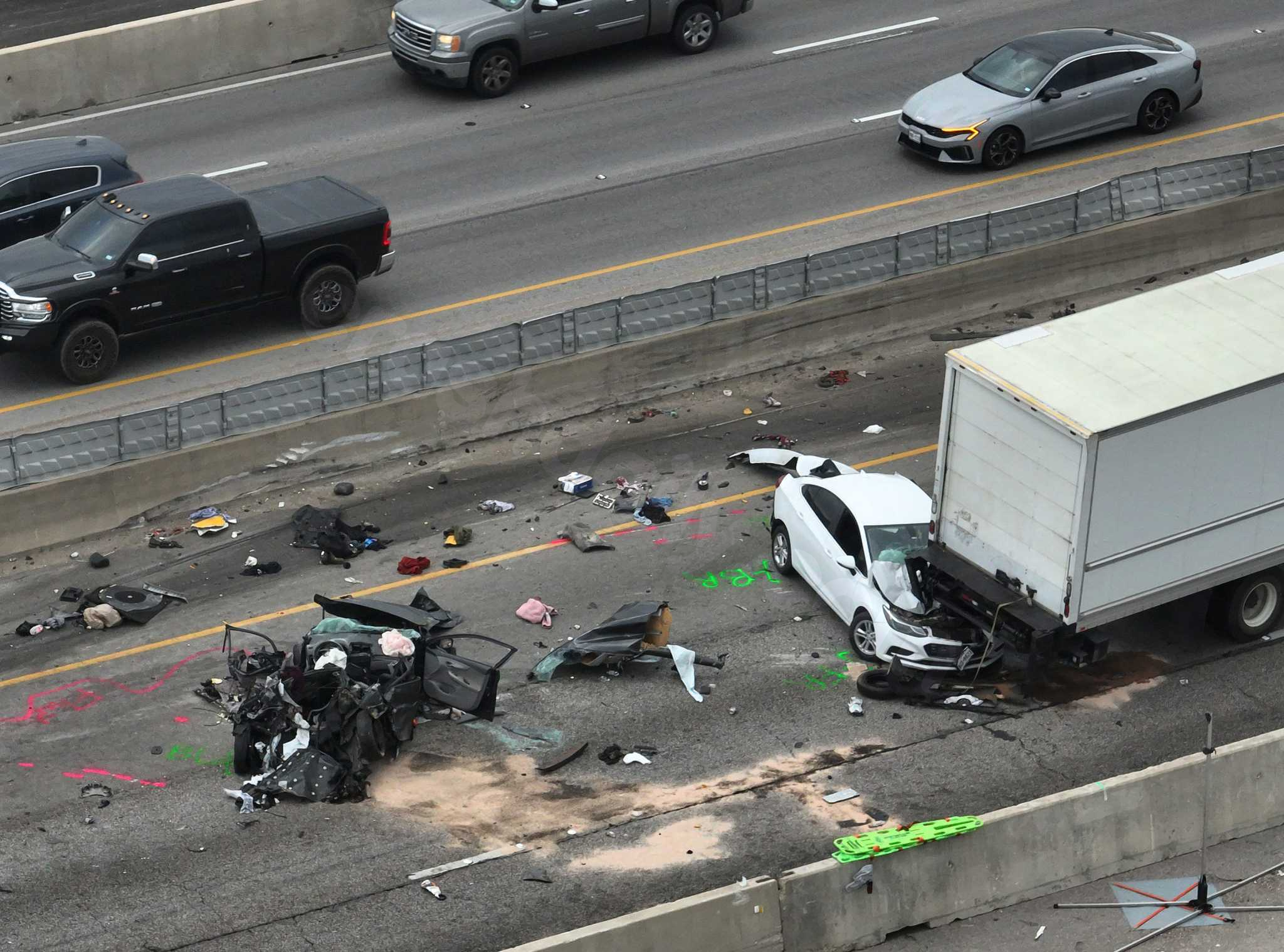
A year after I-35 pileup that killed 5, new details on what led to crash
The National Transportation Safety Board has released hundreds of pages of investigative documents showing that a truck driver accused of causing a deadly Interstate 35 pileup last year in North Austin had been issued the wrong type of commercial driver’s license by the state — an error federal officials say could have kept him off the road years earlier. The documents, released Wednesday, indicate that Texas granted Solomun Weldekeal Araya a standard commercial driver’s license when he should have received a non-domiciled CDL under federal regulations. Had the correct license been issued based on his immigration status, it would have expired years before the March 2025 crash that killed five people, according to federal regulators. Investigators could not determine if he would have been eligible for a CDL at the time of the crash. The Texas Department of Public Safety, which issues driver’s licenses in the state, did not immediately respond to a request for comment. Weldekeal Araya, who was charged with manslaughter and aggravated assault with a deadly weapon, was released on bond in April last year. His case still is pending. His Austin-based defense attorney, Bristol Myers, declined an interview to discuss the documents but asserted in a written statement that none of the information included in the documents was incriminating. “The NTSB report reinforces that this was a tragic accident, not a crime,” Myers said. The documents do not determine a cause of the crash, rather they outline factors investigators are examining. Trucking company lacked safety measures The findings point to a broader cascade of regulatory failures and safety lapses — by the state, the driver and his employer — that investigators say may have contributed to the crash. In addition to the licensing issue, Weldekeal Araya was at risk of losing his CDL at the time of the crash because his required medical certificate had expired about two weeks earlier. The lapse meant his license was set to be downgraded in the weeks after the crash, though his North Texas-based employer — the now-defunct ZBN Transport LLC — said it was unaware the certificate had expired. ZBN also showed significant safety failures, according to the documents, which concluded the company had no formal safety structure, no written hiring procedures and no documented employee policies. When hiring drivers, the owner said he would reach out to members of his Eritrean community to fill openings. Applicants were required to hold a CDL, a driving record and a medical certificate and to pass drug and road tests, but there were no written qualifications or documentation of pre-employment screening. The company’s electronic logging devices flagged Weldekeal Araya 36 times for speeding and 10 times for hard braking in the week leading up to the crash, but none of those incidents were addressed by management. The truck was also equipped with a dashcam and safety monitoring system that was not operational at the time of the crash. Driver was likely distracted, fatigued The crash occurred about 11:20 p.m. March 13, 2025, on southbound Interstate 35 near Parmer Lane. Investigators said Weldekeal Araya was traveling in the center lane when he failed to stop for traffic backed up in a construction zone and slammed into a line of vehicles. His truck struck a Volkswagen Jetta and a Chevrolet Silverado, killing occupants in those vehicles, before continuing another tenth of a mile and hitting 13 additional vehicles. A family of four — including an infant and a child — and an elderly woman were killed. Other drivers told investigators they were able to see the traffic slowdown ahead and react in time to avoid the crash. Federal investigators found that Weldekeal Araya was operating on little sleep, frequently using his phone and speeding in a construction zone in the moments before the crash — factors that had mostly been previously identified. An analysis of his phone activity showed that on the day of the crash, he may have slept no more than 4 hours and 45 minutes total while off-duty, including just 1 hour and 15 minutes of uninterrupted rest. He also used his phone extensively during periods when he was supposed to be sleeping and likely unlocked it within a minute of the crash, though investigators could not determine whether he was actively using it at the time. The truck was traveling about 70 mph in a 60 mph work zone when it approached stopped traffic, according to the documents. Investigators also found discrepancies in his driving logs, including instances of driving while marked off-duty and unaccounted mileage. Though not intoxicated, Weldekeal Araya still faces charges Taken together, investigators describe a pattern of regulatory breakdowns, risky driver behavior and inadequate company oversight. The NTSB declined an interview request but said in a statement that the documents released so far contain only factual findings. “Analysis, probable cause and contributing factors will be determined at the conclusion of the investigation,” the agency said. Weldekeal Araya was initially charged with intoxication manslaughter after the crash. Austin police said he failed multiple field sobriety tests, though a breath test showed a 0.00 blood-alcohol level. Investigators later concluded he may have been under the influence of a central nervous system depressant, but two blood samples taken at the hospital came back clean. He was later indicted on five counts of manslaughter and 17 counts of aggravated assault with a deadly weapon. The indictment alleges that Weldekeal Araya acted recklessly by operating a vehicle at an unsafe speed, disregarding construction zone traffic signs, leaving a designated lane in an unsafe manner, failing to take sufficient action, failing to apply brakes and failing to maintain a proper lookout. The Austin Police Department and the Travis County District Attorney’s Office did not respond to questions about the NTSB documents or how the initial intoxication manslaughter charge might affect the prosecution. The NTSB’s final report is expected to determine what ultimately caused the crash and include recommendations to prevent similar incidents. The NTSB typically completes investigations within 12-24 months of an incident. Staff writer Austin Sanders contributed to this report.
Leave a Comment

Popular News


Recent News


Weather

 83%
83% 6 MPH
6 MPH
-
 18° July 20, 2026
 -
 24° July 20, 2026